MLB's Salary Cap Proposal Delayed to 2028: Dodgers Get Breathing Room
Major League Baseball has hit the pause button on one of its most contentious proposals. On Tuesday, the league announced a strict salary cap and floor set to begin with the 2028 season. This delay is intended to give teams ample time to prepare for the new financial landscape, but it does little to alleviate the growing rift between owners and players. The players' union remains staunchly opposed to a salary cap, with union officials warning that accepting the proposal could cost players over $1 billion in compensation.
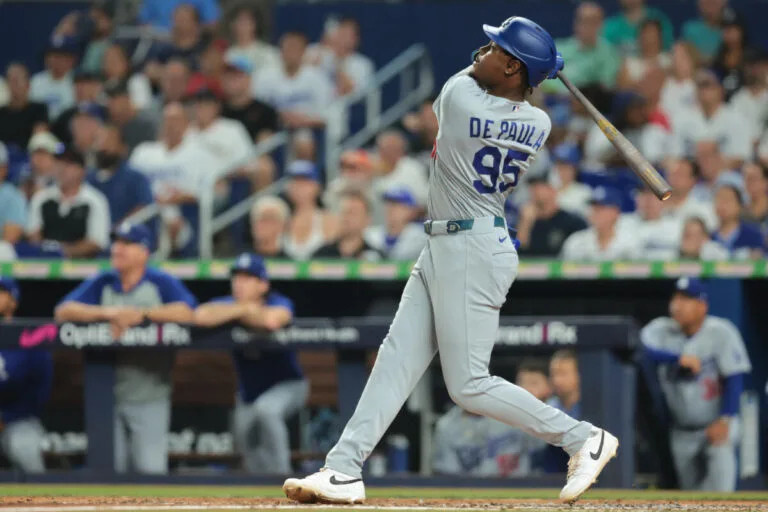
Among the teams facing significant adjustments under MLB's proposal is the Los Angeles Dodgers. Their projected payroll for the upcoming season is estimated at a staggering $388.4 million, far exceeding the proposed cap of $258.2 million. Fortunately for the Dodgers, the league's proposal does not require them to immediately cut their roster. The 2028 start date allows clubs additional time to strategize and adapt to the impending changes.
Gear for the Game
Sponsor success. Continue reading:
MLB spokesman Glen Caplin emphasized the league's understanding of the need for teams to adjust. "We recognize that clubs will need a full offseason to prepare to operate within the cap and floor system," Caplin stated in a league-released statement.
Looking ahead, the Dodgers' projected salary obligations for 2028 stand at approximately $302.6 million, placing them $44.4 million above the proposed cap. However, these figures are merely projections and do not represent a final determination of how the team will navigate the new rules. The Dodgers could potentially lower their payroll through expiring contracts, trades, extensions, or other roster moves before the cap takes effect.
While high-spending teams like the Dodgers will need to reduce their payrolls, lower-spending clubs will face pressure to increase their expenditures. MLB's proposal includes a $180.2 million floor, with transition rules allowing teams to gradually reach this threshold over a three-year period rather than immediately in 2028. This means that 12 teams will need to collectively increase their payroll by a whopping $636 million. The Cleveland Guardians, for instance, had a payroll of just $74.5 million last season, illustrating the scale of the adjustments required.
Teams brace for major payroll adjustments
Conversely, eight teams, including the Mets and Yankees, will need to cut their payrolls by a combined $528 million according to MLB's calculations. The league argues that a 2028 start would facilitate a smoother transition without delaying key player benefits. However, the proposal still represents a significant shift in how teams construct and manage their rosters.
Despite the delay, the fundamental divide between MLB and the players' union remains unresolved. The union has consistently opposed a salary cap, arguing that it would limit player compensation and restrict the free-agent market. With the current collective bargaining agreement set to expire on December 1, the potential for a lockout looms large if the two sides cannot reach a new agreement.
Negotiations cast shadow over free agency
A prolonged stoppage could jeopardize the 2027 season, although the complete loss of the season is not a certainty. As free agency opened on Monday night, the uncertainty surrounding negotiations may impact how teams approach the market. Clubs are faced with making decisions without a clear understanding of the financial rules that may be included in a new labor agreement, creating a cloud of uncertainty over the offseason.
MLB has indicated a willingness to discuss additional appropriate phase-in timelines and procedures for implementing the salary cap and floor, as reported by the New York Post. This openness to negotiation may provide some room for compromise. Yet, the core disagreement remains: MLB is pushing for a salary cap, while the players' union is firmly against it.