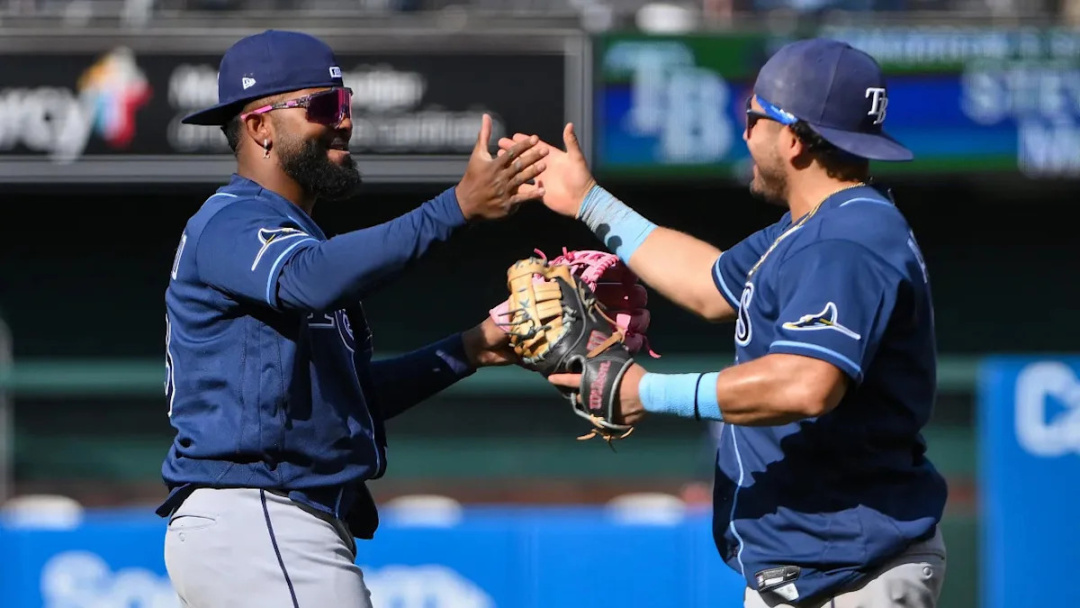
Tampa Bay Rays Drive MLB Attendance Growth Beyond 100%

Baseball attendance is on the rise this season, a trend that seems promising until you take a closer look at the numbers. The Tampa Bay Rays have somehow managed to account for more than 100% of Major League Baseball's entire attendance increase this year. Through August 31, MLB attendance had risen by 518,651 fans compared to the same time last season. However, the Rays alone reported an increase of 519,372 fans, meaning that the other 29 teams combined actually saw a decrease of 721 fans. This peculiar statistic highlights a rather humorous situation for a league that is otherwise celebrating growth.
Removing the Rays from the equation reveals a different story: Major League Baseball would be slightly underwater in terms of attendance. With the Rays included, MLB boasts 61.09 million fans through August, averaging 29,524 fans per game, which translates to a 0.9% year-over-year increase. It’s ironic that a franchise often the butt of attendance jokes is now the sole reason for the league’s positive numbers.
Gear for the Game
Sponsor success. Continue reading:
The explanation for this anomaly is straightforward. Following Hurricane Milton, which damaged Tropicana Field, the Rays spent the entire 2025 season playing at George M. Steinbrenner Field, the Yankees’ spring-training facility. This venue could only accommodate around 10,000 fans, resulting in a dismal average attendance of fewer than 10,000 per game, with a total of just 786,750 fans for the season. Returning to Tropicana Field has dramatically increased their attendance capacity.
This season, the Rays are averaging over 17,000 fans per game, and their competitive performance has provided even more incentive for fans to attend. As they entered September leading the American League East and boasting one of the best records in baseball, demand surged. In August, the Rays even opened upper-deck sections for a game against Baltimore due to limited lower-level inventory, a clear sign of their growing popularity.
Rays' success amid mixed league attendance trends
The broader attendance landscape in MLB makes Tampa Bay's impact even more striking. Only 11 of the 30 clubs were reporting year-over-year attendance increases as September approached. While 17 teams improved from 2024 to 2025, the overall number of franchises moving in the right direction has actually declined, even as the league-wide total continues to rise. The New York Mets, for instance, have been a significant drag, losing nearly 370,000 fans compared to last season. Other teams like Toronto, the White Sox, and Seattle have seen gains, but these increases have been offset by declines elsewhere.
Yet, the Rays have managed to drop another half-million fans onto the positive side of the ledger, positioning MLB for its fourth consecutive season of attendance growth—a feat not achieved since 2004 through 2007. Factors such as the introduction of the pitch clock, competitive races, and other changes have contributed to baseball's recovery in attendance numbers since the pandemic.
As the 2026 season approaches, the attendance increase comes with a rather amusing footnote: the Tampa Bay Rays, a team that has often been the subject of jokes regarding their attendance, are now the driving force behind the league's growth. This unexpected twist not only highlights the Rays' resurgence but also raises questions about the sustainability of this growth across the league as a whole.