Canadian Fan Challenges Trump's Lake America Renaming at FIBA World Cup
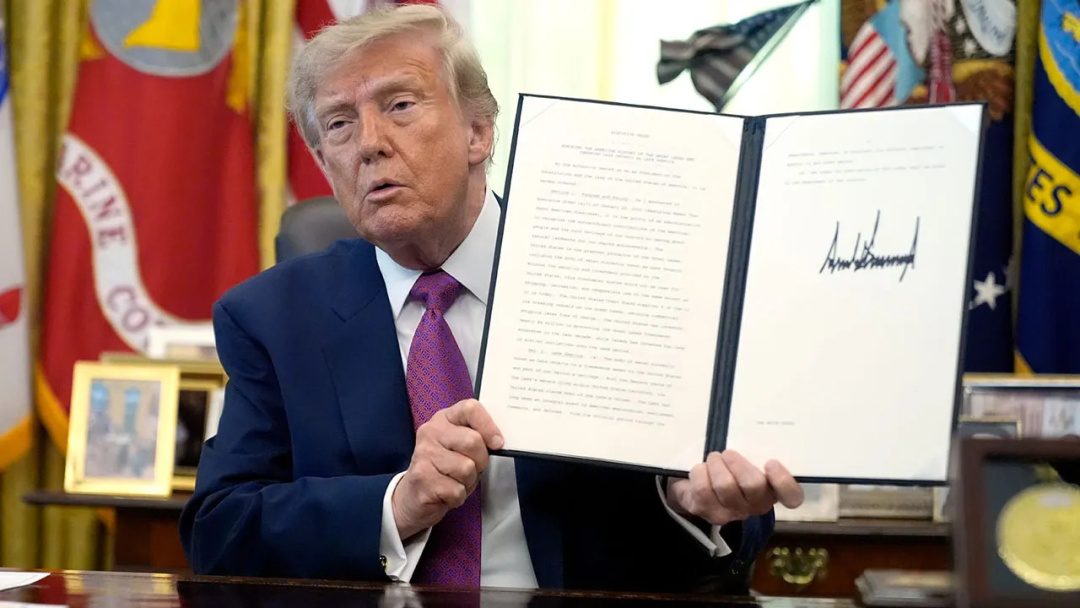
At the FIBA Women's World Cup, a Canadian fan made headlines with a bold sign that took aim at President Donald Trump's recent executive order renaming Lake Ontario as Lake America. The fan's sign, which read "Lake America?" on one side and "Lake Ontario!!" on the other, succinctly expressed her discontent with the name change, which has stirred controversy amid ongoing trade tensions between the two nations.
Trump's decision to rename the Great Lake was announced during a time of heightened trade disputes with Canada, a move that many see as emblematic of his administration's approach to international relations. In a statement made during the signing of the executive order, Trump remarked, "The Lake of America was something I've been thinking about for a long time, actually. As you know, we took something called the Gulf of Mexico — we changed it — and now it's very routinely the Gulf of America." This comment reflects a broader narrative of American exceptionalism that has characterized Trump's presidency.
Gear for the Game
Sponsor success. Continue reading:
The executive order, which aims to reflect the United States' role as a protector of the Great Lakes, has not been well received in Canada. The Canadian fan's protest at the World Cup serves as a reminder of the cultural and political rifts that can arise from such unilateral decisions. While the U.S. government may embrace the name change, it is clear that many Canadians feel differently, as evidenced by the fan's spirited display at the game.
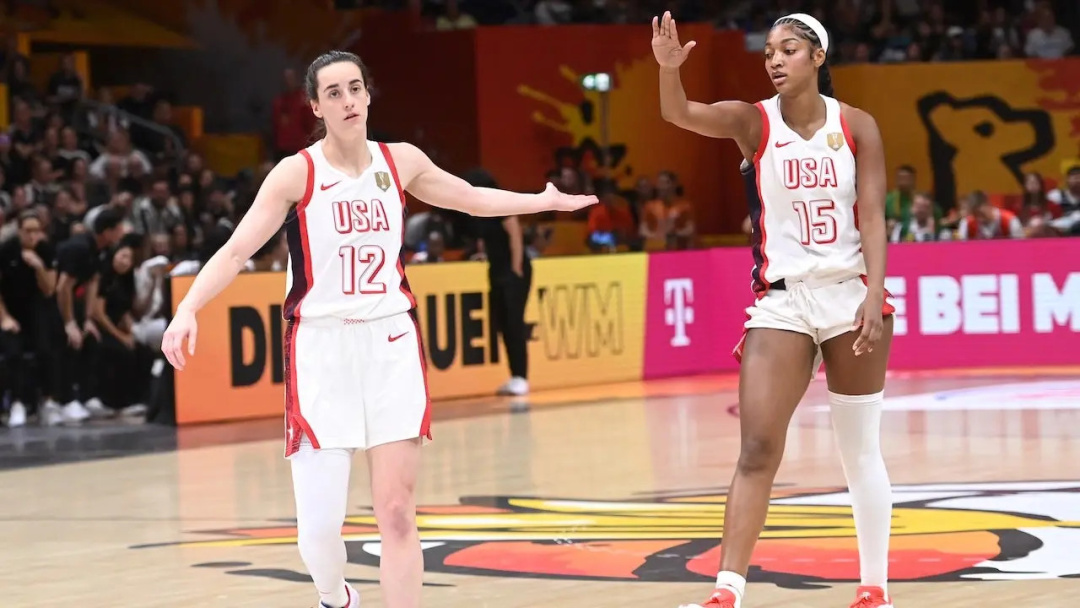
In the backdrop of this political statement, the U.S. women's national basketball team opened their World Cup campaign with a commanding 94-61 victory over China. Caitlin Clark, making her senior international debut, shone brightly, contributing 14 points and 11 assists off the bench. Her performance, along with that of teammates Paige Bueckers and Rhyne Howard, who also scored 14 points each, showcased the team's depth and talent.
Political tensions overshadow sporting triumphs
While the U.S. team celebrated their win, the Canadian fan's protest highlighted the intersection of sports and politics, reminding spectators that international competitions often occur against a backdrop of larger geopolitical issues. The FIBA Women's World Cup is not just a platform for athletic excellence; it also serves as a stage for cultural expression and dissent.
As the tournament progresses, the U.S. team will undoubtedly face scrutiny not only for their performance on the court but also for the political implications of their participation in an event that has become a focal point for national pride and identity. The clash between the fan's message and the U.S. government's actions illustrates how sports can amplify voices and sentiments that might otherwise go unheard.
In conclusion, the Canadian fan's sign at the FIBA Women's World Cup encapsulates the ongoing tensions between the U.S. and Canada, while also serving as a reminder of the power of sports to reflect and challenge political narratives. As the tournament unfolds, it will be interesting to see how these dynamics play out both on and off the court.