India's Table Tennis Campaign Ends with Questions After Bronze Medal
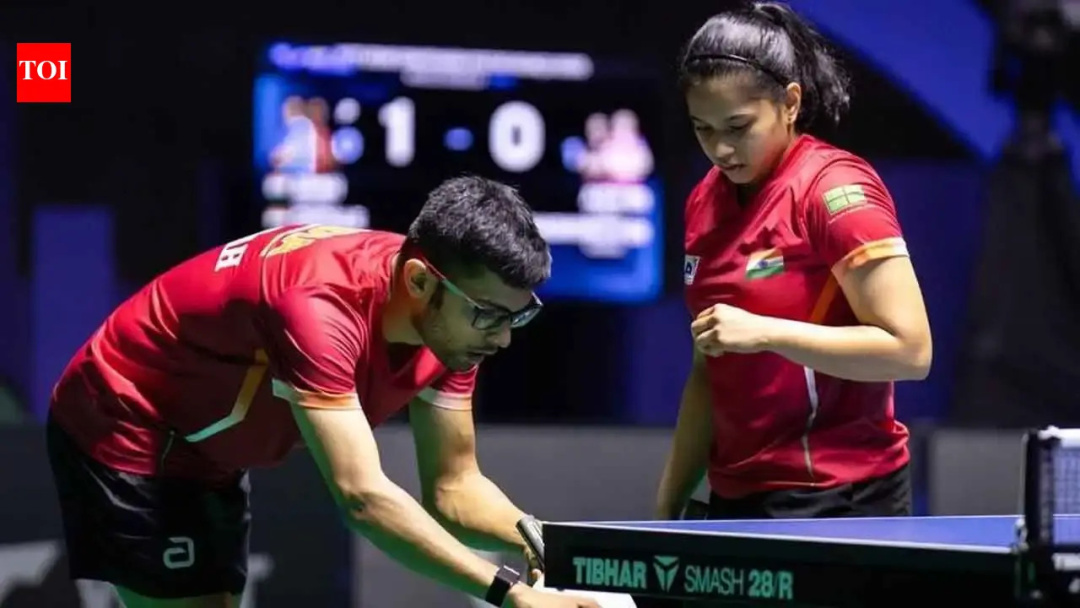
India's table tennis campaign at the Asian Games ended in disappointment, with the team returning home with just a bronze medal in mixed doubles. The duo of Manush Shah and Diya Chitale managed to secure the medal but faced significant challenges throughout the tournament. Shah and Yashaswini Ghorpade's exits in the pre-quarterfinals of their respective singles events highlighted the struggles faced by the Indian paddlers. Shah was defeated by China's Lin Shidong, ranked eighth in the world, while Ghorpade lost to Japan's Miwa Harimoto.
The mixed doubles bronze came after a tough journey, where Shah and Chitale defeated Hong Kong's Wong Chun Ting and Doo Hoi Kem in the quarterfinals before succumbing to China's Wang Chuqin and Sun Yingsha in the semifinals. Despite this solitary medal, the overall performance raised numerous questions about the state of Indian table tennis, particularly in light of the turmoil surrounding the Table Tennis Federation of India (TTFI).
Gear for the Game
Sponsor success. Continue reading:
The TTFI faced suspension from the sports ministry due to governance failures and delayed elections, which complicated the athletes' preparations. The absence of star player Manika Batra from the initial squad further fueled debates about selection criteria and the federation's management. While the athletes focused on their training, the administrative chaos limited their exposure to international competition, which is crucial for their development.
Investment versus disappointing outcomes
The ministry had invested over Rs 25 crore in preparation for the Asian Games, expecting a return of 2-3 medals. However, the reality of just one bronze medal is sobering. The women's team showed promise with victories over Indonesia and Singapore, but they ultimately fell short against North Korea in the quarterfinals. The men's team had a mixed bag, defeating Indonesia but losing to Iran and South Korea.
In singles, both Shah and Ghorpade had moments of brilliance, with Shah achieving 4-0 victories against players from Malaysia and Iran, while Ghorpade triumphed over Syria's Hend Zaza. However, the overall campaign left many unanswered questions about the future of table tennis in India. The lack of medals and the issues surrounding the TTFI's governance raise concerns about the sport's direction and the support provided to athletes.
As the dust settles on this disappointing campaign, the focus must shift to addressing the underlying issues within the federation and ensuring that Indian table tennis can compete effectively on the world stage. The athletes deserve better support and a stable environment to thrive, and it is imperative that the TTFI takes the necessary steps to restore confidence in its leadership and direction.