Gaethje defends Topuria, dismisses 'quit' narrative after UFC 250
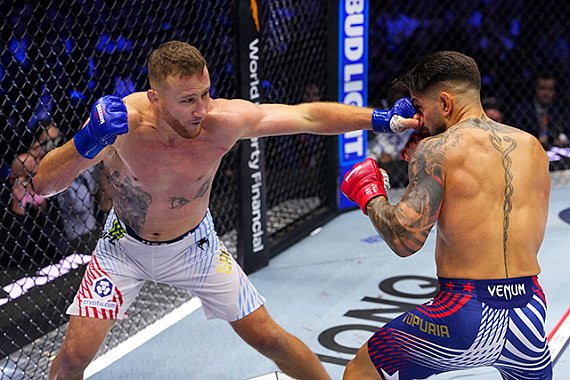
In the aftermath of UFC Freedom 250, Justin Gaethje has taken a firm stance against the narrative suggesting that Ilia Topuria quit during their championship bout. Gaethje, who secured the Ultimate Fighting Championship lightweight title, found himself addressing the controversy that erupted after Topuria's corner opted to stop the fight before the final round. Many fans and fighters alike have alleged that Topuria, known as "El Matador," chose to quit on his stool after the fourth round, but Gaethje vehemently disagrees with this characterization.
During a recent appearance on the "One Night with Steiny" podcast, Gaethje clarified his position, stating that Topuria's corner made the decision to halt the fight based on their assessment of his fighter's condition. "He didn’t quit on the stool," Gaethje asserted. "His body was too compromised to continue fighting. He didn’t make the call; his coaches made the call because they’re there to protect him. My coaches are in my corner to protect me in those times."
Gear for the Game
Sponsor success. Continue reading:
This defense of Topuria comes in light of the backlash that followed the fight, where some fans were quick to label Topuria's corner's decision as an act of surrender. Gaethje's comments highlight the often-overlooked role of a fighter's team in making critical decisions during high-stakes bouts. The pressure of the octagon can lead to split-second choices that may not always be understood by the audience, especially when emotions run high.
Topuria's accusations add to the drama
Topuria, who initially congratulated Gaethje after the fight, has since made accusations regarding Gaethje potentially loading his gloves, adding another layer of drama to the post-fight narrative. Gaethje, however, seemed unfazed by these claims, attributing them to the nature of modern social media. "He’s part of your era," Gaethje remarked, addressing the tendency for fighters to engage in sensationalism for clicks and interactions. "You guys say weird sh*t for fun, dude. I think the internet’s crazy, man. It’s clickbait, engagement, we’re farming out here. We’re farming for interactions. That’s what we’re doing. More interactions, more eyeballs, more opportunity. That’s the game. I don’t like the game, but I’m going to have to play the game. I’m going to try and be me when I do it."
Gaethje's remarks not only defend Topuria but also shed light on the broader implications of how narratives are shaped in the world of mixed martial arts. The fight game is as much about perception as it is about performance, and Gaethje's willingness to speak out against the 'quit' narrative reflects a deeper understanding of the sport's complexities. As fighters navigate their careers, the narratives that emerge can have lasting impacts on their reputations and legacies.
Ultimately, Gaethje's defense of Topuria serves as a reminder that the decisions made in the heat of battle are often multifaceted and should be viewed through a lens of respect for the fighters and their teams. In a sport where every second counts, the choices made by corners can be life-saving, and it's crucial to recognize the intent behind those decisions rather than hastily labeling them as defeat. The UFC landscape continues to evolve, and with it, the conversations surrounding fighter safety, decision-making, and the narratives that follow them.