Former Wallaby Nathan Charles Diagnosed with Motor Neurone Disease
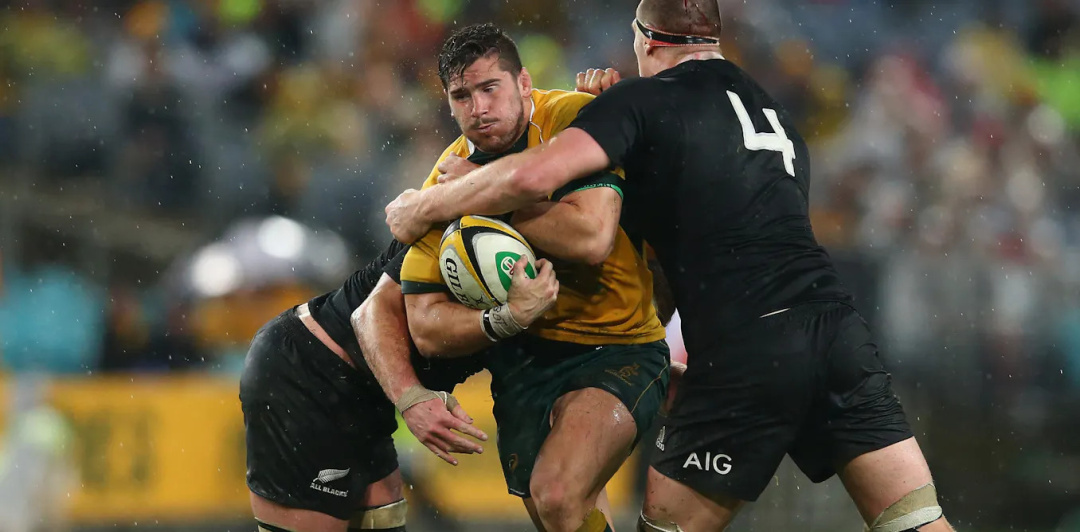
Former Wallaby Nathan Charles, who famously overcame cystic fibrosis to compete at the elite level of rugby, has recently revealed his diagnosis of motor neurone disease (MND). This announcement follows the high-profile case of rugby league player Jai Arrow, who also garnered national attention with his own MND diagnosis, and the tragic passing of former Australian rules football player Geoff Ablett due to the same disease.
The emergence of another athlete with MND brings back a pressing question: is there a connection between the repeated impacts associated with contact sports and the risk of developing MND? MND is a progressive condition that affects motor neurons, the nerve cells responsible for sending signals from the brain to the muscles, which control movement.
Gear for the Game
Sponsor success. Continue reading:
As these neurons deteriorate and die, the muscles weaken and waste away, leading to the loss of essential functions such as movement, speech, swallowing, and even breathing. Symptoms can vary widely among individuals and may appear suddenly, worsening progressively. Most individuals diagnosed with MND face paralysis and a reduced lifespan, typically within two to five years. However, a small percentage may live longer, as evidenced by former Australian rules player Neale Daniher, who lived with MND for 13 years, and theoretical physicist Stephen Hawking, who managed to live with the disease for 55 years.
Charles, who played four Tests for the Wallabies in 2014, received his diagnosis on September 13 after experiencing symptoms for approximately eight months. In sharing his diagnosis, he expressed the emotional and physical toll it has taken on him: "It has been extremely challenging and overwhelming, and at times quite cruel. I am already greatly impacted by it. I get around with mobility aids and struggle with many daily tasks. Putting on shoes and socks is a challenge."
While MND is considered rare, with around 2,800 individuals living with the disease in Australia at any given time, the recent media focus on athletes diagnosed with MND has sparked discussions about the potential association between contact sports and the disease. Familial MND, which is inherited through specific gene mutations, accounts for about 10% of cases, while sporadic MND occurs without a clear family history, primarily affecting individuals aged 50 to 70.
Linking contact sports to MND risk
Researchers are exploring whether multiple subtle risk factors contribute to triggering MND, including the possibility of repetitive sub-concussive head impacts increasing the risk. Although it is challenging to definitively state that such impacts cause MND, emerging research suggests a heightened risk among those with significant exposure to concussive and sub-concussive impacts, particularly in contact sports.
Studies indicate that participation in elite sports may be linked to a four to 15-fold increased risk of developing MND. A 2022 study of former Scottish international rugby union players revealed that these athletes were approximately 15 times more likely to be diagnosed with MND compared to men of similar age and background in the general population. Similarly, recent studies of former NFL players reported that athletes were 4.5 times more likely to die from MND. Other sports, such as soccer, where heading the ball raises concerns, have also shown an elevated risk of nearly two-fold.
Despite the concerning findings, current evidence remains limited and primarily points to an association between head impacts and an increased risk of MND, rather than establishing a direct causal relationship. Furthermore, there is a notable lack of relevant MND research focused on rugby league and Australian rules football players, two sports where concerns regarding brain injury are increasingly prominent.
To better understand potential associations, it is crucial to screen for risk factors through sports participation, alongside other suspected exposures that might elevate MND risk, such as smoking, air pollution, and blue-green algae. It is essential to inquire whether patients tested for possible MND have played contact sports, including details about their age of onset, duration of play, and concussion history.
The recent revelations regarding high-profile athletes diagnosed with MND serve as a stark reminder of the need to support those affected by the disease while also ensuring that the sports we enjoy are safe for participants. The cost of our entertainment should not come at the expense of the health and well-being of those who risk their lives and health for our enjoyment.