Promotion Woes: The Champions of Germany's Regional League Northeast
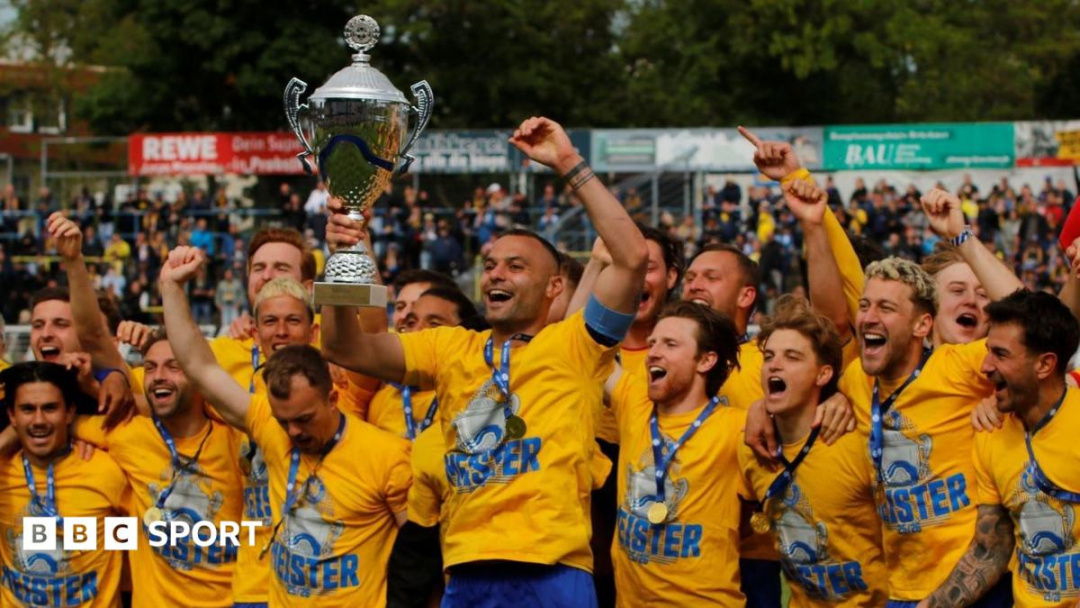
Djamal Ziane, captain of Lokomotive Leipzig, has experienced the bittersweet taste of victory three times, yet the joy of lifting the trophy in the Regional League Northeast is overshadowed by frustration. For the second consecutive year, Ziane and his team celebrated winning the title in Germany's fourth tier, only to face the harsh reality that their triumph did not guarantee promotion. This season, as in 2025 and 2020, Lokomotive Leipzig found themselves in a playoff against Wurzburger Kickers, a representative from the Regional League Bavaria. Despite Ziane scoring, injury woes plagued the team, leading to a 3-1 aggregate loss and leaving them stranded in the same division.
"Euer System ist krank," read a banner held by the 2,000 Lok supporters who traveled to the playoff match, translating to "your system is sick." Ziane echoed this sentiment, expressing his dismay at the current promotion structure, stating, "It's the worst thing – injury aside – that you can experience as a footballer. Catastrophe doesn't cut it. It doesn't make any sense. If they really wanted to change it, they could do tomorrow."
Gear for the Game
Sponsor success. Continue reading:
The bottleneck in Germany's football pyramid is glaring. Below the Bundesliga, 2. Bundesliga, and 3. Liga, the fourth tier is divided into five regional leagues, each producing a champion. However, with only four promotion spots available from the 3. Liga each season, one champion is left without a path to ascend. Currently, the champions from the West and Southwest leagues are granted automatic promotion, while a third spot rotates among the remaining leagues. The fourth spot is determined through a playoff, which has increasingly left champions from the Northeast, like Lokomotive Leipzig, without a chance to move up.
The socio-economic disparities between East and West Germany further complicate the situation. Clubs in the East face challenges not only on the pitch but also in terms of financial backing and support. Ziane's frustration is compounded by the fact that the average attendance in the Regional League Northeast was nearly double that of other leagues last season, yet this does not translate into automatic promotion. Lok Leipzig's attendance figures were impressive, with over 6,000 fans showing up for their matches, yet they still find themselves in the fourth tier.
Toni Wachsmuth, Lok's chief executive, lamented the lack of access to sponsors and resources compared to clubs in the West. "The [western] leagues do have better economic foundations, but everyone agrees that the current system is nonsense. Everyone needs to compromise, but some officials are clearly putting their own interests and positions above the general good of German football," he stated.
In March 2025, a new campaign emerged from the East, advocating for a reform of the promotion system with the slogan "Meister müssen aufsteigen!" – champions must go up! The proposal suggests reducing the number of leagues from five to four, with geographical borders determined anew each season using artificial intelligence to optimize travel distances and create attractive derbies. This initiative, dubbed the compass model, aims to address the systemic issues while allowing the Regional League Northeast to relinquish its historical ties to the former East Germany.
Haeder champions reform for fair promotions
Tommy Haeder, chief executive of Chemnitzer FC and a leading voice in the reform campaign, emphasized the importance of a fair promotion system for the development of talent in German football. He argued that young players should not have to leave their homes at a young age to join academies in the West. The compass model, he believes, is a solution that requires sacrifice from all regions to address a larger problem.
Support for the compass model has grown, with over 80 clubs across Germany backing the initiative. Notably, Union Berlin, once a fourth-tier club, became the first Bundesliga team to endorse the proposal. Borussia Dortmund's president, Hans-Joachim Watzke, also voiced his support, stating, "Champions must go up, and we think the compass model with four regional leagues is the best option."
As discussions progressed, a key vote was scheduled for the end of June. However, the vote was marred by last-minute changes that reduced the number of teams in the new leagues and required a majority from each region for the model to pass. Despite an overall majority in favor of the compass model, the Southwest region voted for an alternative that would dissolve the northeastern league, leaving many feeling disillusioned.
Protests erupted across German football, with fans expressing their dissatisfaction with the current system. Lok Leipzig supporters symbolically threw plastic trophies onto the pitch, while Bayern Munich's ultras criticized the Bavarian Football Federation for their perceived lack of cooperation. The message was clear: fans and clubs alike are demanding change.
The German Football Federation (DFB) has since announced an extraordinary general meeting to address the promotion issue, with President Bernd Neuendorf stating, "[The issue] must be resolved. The compass model received the most votes and offers the best chance for a concentration of elite performance and therefore better development of talent." However, any changes would not take effect until the 2028-29 season, leaving Ziane and his teammates still yearning for the promotion that has eluded them despite their hard-fought victories. As Ziane reflects on his journey, he acknowledges the difficulty of winning the league and the emotional toll of being champions without a path to ascend. "You can never completely get over it because, at our level, the 3. Liga is probably the pinnacle. Promotion with my hometown club would have been the most wonderful thing in the world for me," he concludes, as he prepares for another season of striving for success in the fourth tier.