Padres' playoff hopes dimmed by controversial ninth-inning call
The Milwaukee Brewers secured a pivotal win against the San Diego Padres in Game 1 of the National League Division Series, but not without a significant controversy that has left fans buzzing. The game, which featured the Brewers' ace Jacob Misiorowski, was tightly contested, showcasing the drama that often accompanies Major League Baseball's postseason. Misiorowski, a likely candidate for the NL Cy Young Award, entered the game with a staggering 1.80 ERA and a reputation for dominance, but the Padres managed to push him out after just four innings, scoring two runs against him.
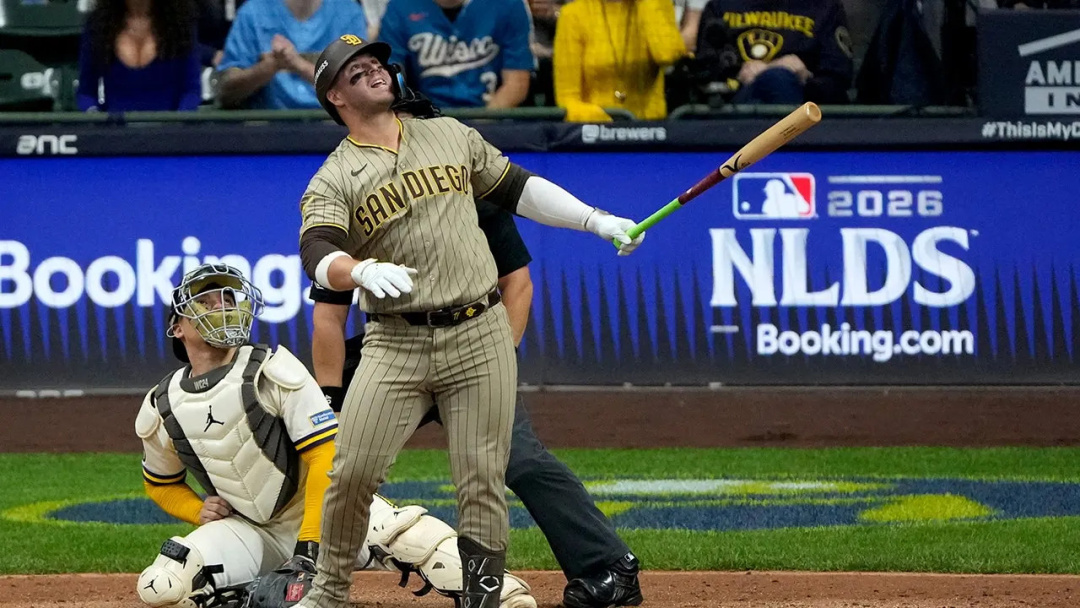
As the game progressed, the Brewers clawed back, tying the score with a homer from Jackson Chourio and later taking the lead with another from William Contreras. The tension escalated in the ninth inning when the Padres, trailing and facing Brewers closer Trevor Megill, found themselves in a critical situation. After a single from Dustin Harris, Ty France stepped up to the plate and launched what many believed was a potential go-ahead home run.
Gear for the Game
Sponsor success. Continue reading:
However, the ball struck the roof support system at American Family Field, leading to a controversial ruling that left players and fans alike in disbelief. The umpires determined that the ball was in fair territory when it hit the roof, resulting in an out rather than the home run that France and many others believed it could have been. This decision was met with confusion, as fans expected a ball hitting the roof to be ruled dead, but according to MLB's ground rules for the stadium, the call was indeed correct.
Understanding the controversial ruling's implications
The rule states that if a batted ball strikes the roof or any of its supporting structures over fair territory, it remains in play. Thus, when the ball was caught by Chourio in left field, the umpires confirmed the out, effectively ending the Padres' hopes for a comeback. France expressed his frustration post-game, questioning the technology available and suggesting that there should be a better way to handle such situations. "You would think with all the technology we have now we’d be able to make a clear call on that," he remarked, indicating that he felt the ruling was unjust.
Despite the uproar, Statcast data provided a clearer picture of the situation. The metrics revealed that France's fly ball had an exit velocity of 105.3 mph and a launch angle of 49 degrees, projecting a distance of only 325 feet. Given that the left field wall at American Family Field is 342 feet from home plate, it was unlikely that the ball would have cleared the fence even without the roof interference. Statcast's analysis showed that balls hit with similar characteristics typically result in outs 99.5% of the time, further supporting the umpires' decision.
While the controversy surrounding the call may linger, the data suggests that the Padres' disappointment should not solely rest on this moment. The game was a showcase of competitive spirit, with both teams demonstrating their strengths and weaknesses. The Brewers capitalized on their opportunities, while the Padres will need to regroup and focus on the next game in the series. As the postseason unfolds, this incident serves as a reminder of the fine line between triumph and heartbreak in baseball, where every play can be the difference between victory and defeat.